Is Online Trading Safe? The Honest Truth for Beginners in 2026
If you have been searching for "online trading" on Google or YouTube, you have probably seen two types of content:
- The guy in a rented Lamborghini promising you can become a millionaire in a week.
- Horror stories of people losing their life savings in a "scam."
This creates a confusing picture. Is online trading a legitimate financial career, or is it just a digital casino rigged against you?
The short answer is: Online trading is a legitimate, regulated financial activity but it carries significant risks that you must understand.
In this comprehensive guide, Jaaz Markets is going to separate the myths from the reality.
We will explain the difference between Platform Risk (is the broker safe?) and Market Risk (is the trade safe?), and give you a checklist to ensure you never fall for a scam.
The Two Types of "Safety"
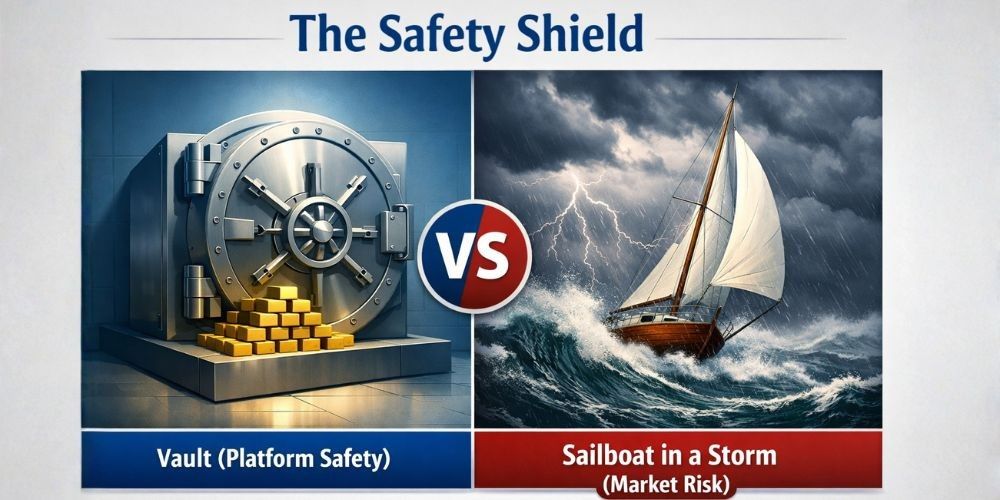
When beginners ask, "Is trading safe?", they are usually asking two different questions at once. We need to answer them separately.
This refers to the company you are depositing money with.
- The Fear: "Will they run away with my money?"
- The Reality: If you choose a regulated, reputable broker, your funds are secure. Legitimate brokers operate under strict international laws regarding Anti-Money Laundering (AML) and client fund segregation.
This refers to the act of buying and selling assets.
- The Fear: "Will I lose my money making a bad trade?"
- The Reality: Yes, this is possible. Trading involves Risk. The market moves up and down. If you predict the wrong direction, you lose money. This is not a scam; this is the nature of financial markets.
How to Spot a "Fake" Broker vs. A Real One
In 2026, creating a fake website is easy. Scammers build platforms that look like real trading sites but are designed to steal deposits. Here is how to tell the difference immediately.
✕ The Red Flags (Scam Indicators)
- "Guaranteed Returns": If anyone promises you "10% profit per week guaranteed," run away. The market is unpredictable. No honest broker can guarantee a profit.
- Cold Calling: Reputable brokers do not call you out of the blue demanding you deposit money right now.
- Managed Accounts: If a "broker" offers to trade for you and just send you the profits, it is likely a Ponzi scheme.
- No Legal Pages: A scam site will often hide its Terms & Conditions.
✅ The Green Flags (Legitimate Brokers)
- Transparency: They publish their legal documents openly. For example, at JaazMarkets, our Terms & Conditions and Client Agreement are available to everyone before they sign up.
- KYC (Know Your Customer): A real broker must ask for your ID and proof of address. This is not to annoy you; it is a legal requirement to prevent money laundering.
Read our AML & KYC Policy to understand why we do this. - Risk Disclosures: An honest broker will warn you that trading is risky. They won't pretend it's "easy money."
See our full Risk Disclosure.
Understanding "Market Risk": How Money is Lost
Even if your broker is 100% safe, you can still lose money. Why? Because the market doesn't care about your feelings.
Prices change fast. During major economic news (like US inflation data or interest rate decisions), a currency pair can jump or crash in seconds.
- The Risk: If you are on the wrong side of the move, your loss can happen instantly.
- The Solution: Avoid trading during high-impact news events until you are experienced. Check our Economic Calendar to know when these events are happening.
We discussed leverage in our previous blog. It allows you to trade with more money than you have.
- The Risk: If you use high leverage (e.g., 1:500) and the market moves just 0.2% against you, you could lose your entire balance.
- The Solution: Use low leverage when you are a beginner. Just because the car can go 200mph doesn't mean you should drive that fast.
Sometimes, the market "jumps" from one price to another without trading in between. This often happens over the weekend.
- The Risk: You might close your laptop on Friday with a profit, and open it on Monday with a loss because the price "gapped" over the weekend.
Data Security: Is Your Personal Info Safe?
In the digital age, your data is as valuable as your cash. When you sign up for a trading account, you are handing over sensitive info (Passport, Bank details).
You must ensure your broker uses:
- SSL Encryption: Look for the padlock icon in the browser URL bar (https://). This ensures hackers can't intercept your data.
- Segregated Accounts: This is a crucial banking standard. It means the broker keeps your money in a separate bank account from the company's money. The broker cannot use your deposits to pay their office rent or electricity bills.
At JaazMarkets, we take data privacy seriously. You can review exactly how we handle your data in our Privacy Policy.
The "Safety Checklist" for New Traders
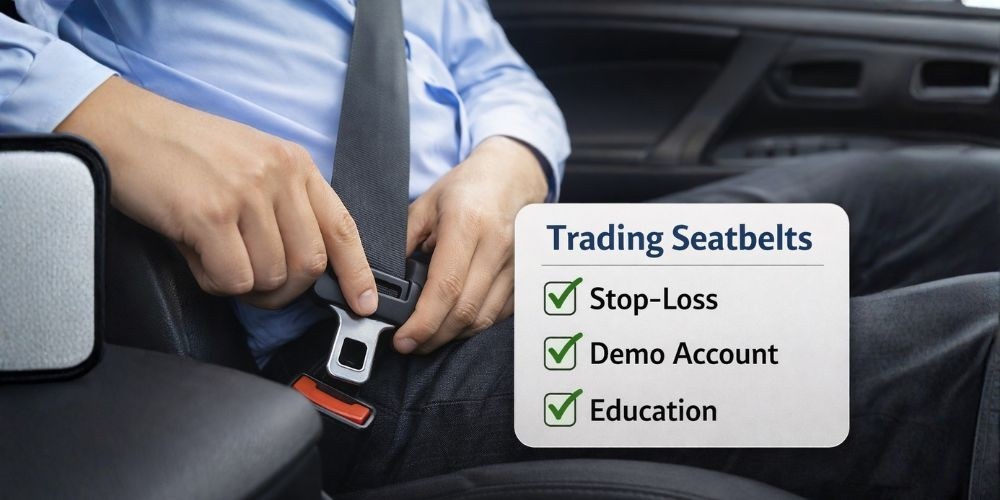
Before you place your first live trade, go through this safety protocol. If you can check all these boxes, you are trading as safely as possible.
Never trade with money you cannot afford to lose. If losing $500 would mean you can't pay your rent, do not put that $500 into a trading account. The psychological pressure will make you trade badly.
A Stop Loss is an automated order that tells the system: "If I lose $10 on this trade, close it immediately."
Rule: Never open a trade without a Stop Loss. It is your seatbelt. It prevents a small scratch from becoming a fatal crash.
Don't jump into the deep end.
- Read the Glossary so you understand the terms.
- Test your strategy on a Demo Account for at least 2 weeks.
Complete your profile verification immediately after signing up. Do not wait until you want to withdraw money. Issues with withdrawals often happen because users forgot to upload their ID documents weeks earlier.
Conclusion: Trading is a Responsibility
Is online trading safe?
- Technically? Yes, if you use a secure platform like JaazMarkets that prioritizes Client Agreements and data security.
- Financially? It is only as safe as you make it.
The market is a tool. Like a power saw, it can build a house, or it can cut your hand. The difference is knowledge, safety gear (risk management), and respect for the tool.
If you treat trading with the respect it deserves, viewing it as a profession rather than a gamble, it can be a safe and rewarding pursuit.
👉 Open a Free Demo Account Now and practice with virtual currency.