What Is Forex Trading and How Does It Work? (The 2026 Guide)
Category: Forex-Specific Learning Market Basics Reading Time: 14 Minutes Difficulty: Beginner
When you hear the word "Market," you probably think of the New York Stock Exchange-a building with a bell and people in suits shouting.
But there is another market. A market with no building. A market that never sleeps. A market that trades $6.6 Trillion dollars every single day.
This is the Forex Market.
It is bigger than the Stock Market, the Bond Market, and the Crypto Market combined. It is the lifeblood of the global economy. Without it, you couldn't buy a Toyota (Japanese) in America, and you couldn't drink Colombian coffee in London.
But what exactly is Forex trading? Is it just for banks, or can regular people actually make money from it?
In this deep-dive guide, we will peel back the layers of the Foreign Exchange market. We will explain how it works, who controls it, and how you can grab your slice of the $6.6 trillion pie.
1. The Definition: What is Forex?
Forex (FX) stands for Foreign Exchange.
At its simplest level, it is the act of changing one currency into another.
- Tourism: When you fly from New York to Paris, you exchange your Dollars for Euros. You have participated in the Forex market.
- Business: When Apple buys parts from China, they must exchange US Dollars for Chinese Yuan. They have participated in the Forex market.
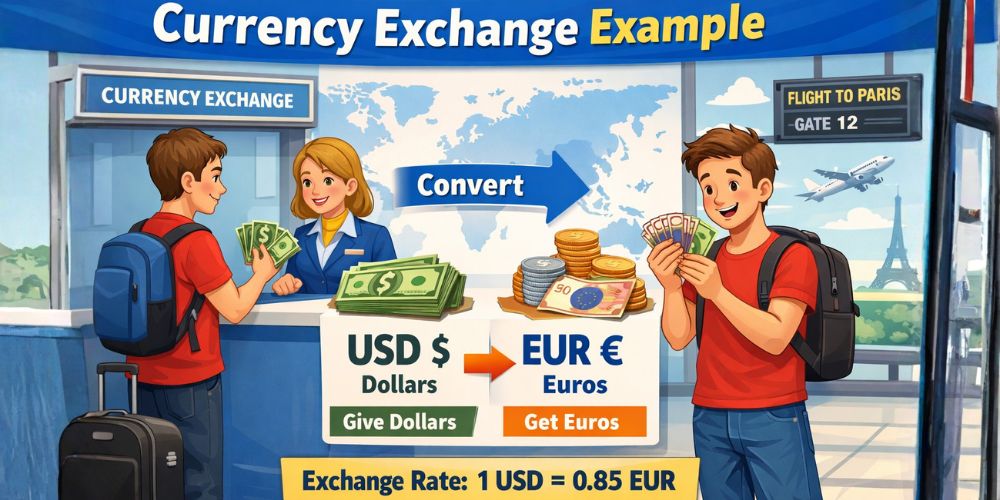
Forex Trading is when you do this for Profit, not for travel or business. You are buying a currency now because you believe it will be worth more later.
2. Market Structure: No Central HQ?
This is the hardest concept for stock traders to grasp.
- The Stock Market is Centralized: If you want to buy Apple stock, you must go through the NASDAQ exchange. All orders go to one place.
- The Forex Market is Decentralized (OTC): There is no "Forex Building." There is no central server.
Forex is an Over-the-Counter (OTC) market. It is a digital network of banks, hedge funds, and brokers connected by computer terminals.
- When you trade, you aren't trading with "The Exchange."
- You are trading with your Broker, who is trading with a Liquidity Provider (like a Bank), who is trading with other Banks.
Why does this matter? Because there is no central location, the market can remain open 24 hours a day. When the banks in London close, the banks in New York are open. When New York closes, Tokyo opens. The sun never sets on Forex.
3. The Food Chain: Who Are You Trading Against?
To survive in Forex, you must know your place in the food chain. The market is structured like a pyramid.
At the top are the massive commercial banks: JP Morgan, Citi, Deutsche Bank, HSBC, Barclays.
- They trade billions of dollars instantly.
- They trade directly with each other on private systems (EBS/Reuters).
- They determine the price you see on your screen.
- Central Banks: The Federal Reserve or ECB. They step in to manipulate the price if their currency gets too strong or weak.
- Corporations: Toyota, Apple, Samsung. They trade to pay for products, not to speculate.
Examples: Bridgewater, George Soros. They trade massive amounts to make a profit.
- You are at the bottom. You trade small amounts (Micro/Mini lots).
- Since you can't call JP Morgan directly, you need a Retail Broker (like JaazMarkets) to connect you to the market.
4. The Mechanics: How a Trade Actually Works
In the stock market, you can just "Buy Apple." In Forex, you can never just "Buy Dollar." You must buy Dollar and sell something else. Currencies always come in Pairs.
The Tug-of-War
Imagine a rope.
- On the left side is the Euro (EUR).
- On the right side is the US Dollar (USD).
- The "Price" is the flag in the middle.
If the Euro gets strong, it pulls the flag to the left (Price goes UP). If the Dollar gets strong, it pulls the flag to the right (Price goes DOWN).
The Three-Letter Codes (ISO)
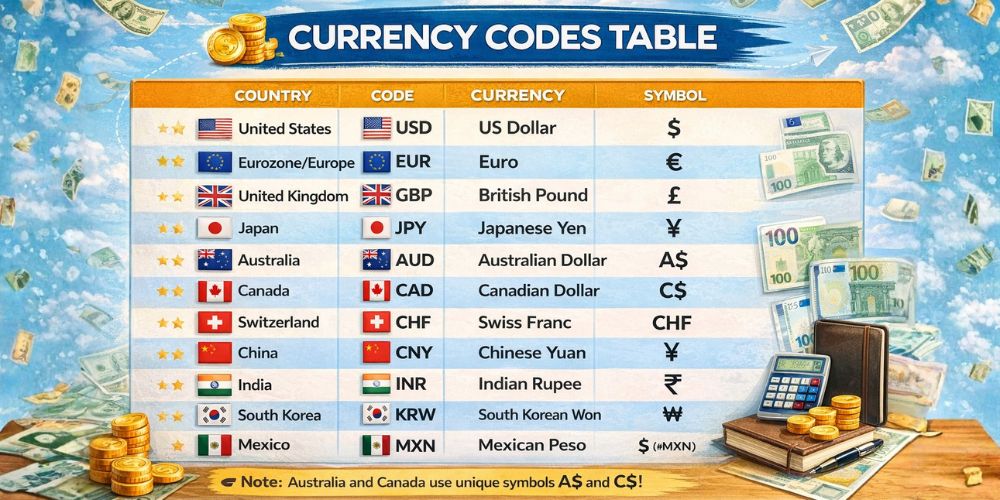
Every currency has a 3-letter code.
- First 2 letters = Country Name.
- Last letter = Currency Name.
- USD = United States Dollar.
- JPY = JaPan Yen.
- GBP = Great Britain Pound.
The Nicknames
To sound like a pro, learn the slang:
- USD: "The Greenback" or "Buck."
- GBP: "Sterling" or "Cable."
- EUR: "The Single Currency" or "Fiber."
- CHF: "The Swissy."
- NZD: "The Kiwi."
- AUD: "The Aussie."
- CAD: "The Loonie."
5. Why Trade Forex Instead of Stocks?
Why do millions of traders choose currencies over companies? Explore the advantages of forex.
- Liquidity (Easy In, Easy Out): Because the market is so huge ($6.6 Trillion), you can always find a buyer or seller. You will never be "stuck" in a trade. Your orders execute in milliseconds.
- Leverage (Trading on Steroids): In the stock market, you usually trade 1:1. You need $10,000 to buy $10,000 of stock. In Forex, brokers offer Leverage (often 1:100 or 1:500). You can control $10,000 of currency with just $100.
- Profit in Both Directions: In stocks, you usually only make money if the price goes UP (unless you do complex shorting). In Forex, Buying and Selling are equally easy. Think the Euro will crash? Click Sell. Think the Yen will rise? Click Buy. There is no "Bear Market" in Forex; there is just a market moving a different way.
- Low Transaction Costs: Most stock brokers charge a commission per trade. Most Forex brokers (like JaazMarkets) charge a Spread (a tiny difference between the Buy/Sell price).
Compare our low spreads on the Trading Conditions Page.
6. What Moves the Price? (The Engine)
Unlike stocks, where a CEO's tweet can crash the price, currencies move based on Macroeconomics. Learn more in our fundamental analysis guide.
- 1. Interest Rates (The Big Driver): Money flows to where it is treated best. If the US pays 5% interest on savings and Japan pays 0%, investors will sell Yen and buy Dollars. Higher Rates = Stronger Currency.
- 2. Inflation: If a country has high inflation, its buying power is eroding. Usually, the currency weakens (unless the Central Bank raises rates to fight it).
- 3. Geopolitics: Currencies hate uncertainty. If there is a war or a confusing election in a country, investors flee. They usually run to "Safe Havens" like the US Dollar, Japanese Yen, or Swiss Franc.
7. How to Read a Forex Quote (Recap)
We covered this in a previous guide, but here is the 30-second refresher.
Quote: EUR/USD = 1.1050
- Base Currency (Left): EUR. It is always worth 1.
- Quote Currency (Right): USD. It is the Price.
- Translation: "1 Euro costs 1.1050 US Dollars."
The Math: If the number rises to 1.1060, the Euro is stronger. If the number falls to 1.1040, the Euro is weaker. To understand volume, read about lot sizes.
8. Risks You Must Know
Forex is not a "Get Rich Quick" scheme. It is a "Get Rich Slow or Go Broke Fast" scheme depending on your discipline. Review our Risk Disclosure.
- Leverage Risk: High leverage can wipe out your account in minutes if you don't use a Stop Loss. Read our Leverage Guide.
- News Risk: During major events (like Non-Farm Payrolls), prices can jump so fast that you experience Slippage (getting filled at a worse price).
- Psychology: The market is open 24/5. This tempts beginners to overtrade and lose sleep. Learn how to avoid common trading mistakes.
Conclusion: Is Forex Right For You?
Forex trading is the ultimate test of discipline and strategy. You can see how much money you need to start.
It is for you if:
- You want a market with high liquidity and fast execution.
- You can handle risk and are willing to learn risk management.
- You want the flexibility to trade at any time of day.
It is NOT for you if:
- You are looking for "guaranteed" returns.
- You are trading with money you need for rent.
- You get emotional easily when losing. Learn about trading safety.
- Open a Free Demo Account.
- Open the EUR/USD chart on our Web Trader.
- Watch the price tick up and down on your Mobile App.
- Try to place a Buy trade. See what happens.
Welcome to the world's largest market. .